Stainless Steel vs Aluminum: Which Soft Wash Hose Reel Should You Choose?

Table of Contents
Introduction
If you're in the market for a soft wash hose reel — especially for heavy-duty, high-pressure, or chemical-exposed cleaning work — the material of the reel matters a lot. Two common options are stainless steel and aluminum. At J Racenstein, we offer both stainless-steel and aluminum reels for soft wash and pressure-wash hoses, so it's worth understanding the trade-offs before you buy.
What Makes a Good Soft Wash Hose Reel
A quality soft wash hose reel should:
Withstand regular exposure to water, detergents, and pressure.
Resist corrosion and chemical damage.
Support long hose lengths (for example, 200–400 ft hoses).
Be easy to wind/unwind, with a reliable swivel or bearing system.
Offer durability and long service life — minimizing downtime or replacement costs.
Stainless Steel Hose Reels — Pros & Cons
Pros
Stainless steel reels are highly corrosion-resistant, making them ideal for harsh environments, frequent exposure to water or chemicals, and outdoor use.
They’re very durable — able to handle high loads, high pressure, and resist impacts, warping, or deformation over time.
Because they don’t rely on coatings or paints (which can degrade or chip), they typically require less maintenance for rust prevention.
Cons
Stainless steel constructions tend to be heavier and more rigid, which can make handling, mounting, or transporting them more cumbersome compared to lighter materials.
The rigidity and weight can make winding/unwinding less maneuverable, especially with long hose runs or in tight spaces. Upfront cost tends to be higher.
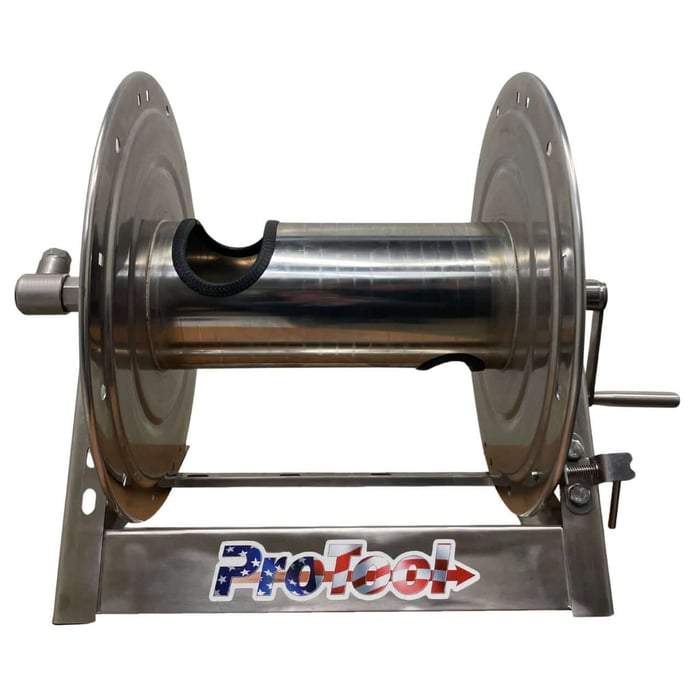
ProTool's stainless-steel model — for example, the heavy-duty reel suitable for 325 ft 1/2″ or 400 ft 3/8″ hose at 4000 PSI — is a robust option if you want maximum longevity and minimal maintenance.
Reel Stainless Steel for 325ft 1/2in or 400ft 3/8in hose 4000psi
$416.05
Reel Large Capacity Stainless Steel Hose Reel 100% Stainless Steel reel with a capacity for up to 400ft of 3/8in Hose or 300ft of 1/2in… read more

Aluminum Hose Reels — Pros & Cons
Pros
Aluminum reels are much lighter, making them easier to move, mount, or reposition — a benefit when you’re dealing with long hoses or need mobility.
Aluminum naturally forms a protective oxide layer, which helps resist corrosion and withstand exposure to moisture or damp conditions.
Because of their lighter weight and ease of manufacturing, aluminum reels are often more ergonomic and easier to handle for frequent hose winding/unwinding.
They can offer a “good-enough” lifespan for many soft-wash or pressure-wash applications — especially if not exposed to extreme corrosive conditions.
Cons
Although aluminum resists corrosion well in normal conditions, it may not hold up as long under heavy chemical exposure, saltwater, or industrial-level wear — compared to stainless steel.
Since aluminum is lighter and softer than stainless, it may not tolerate extremely heavy hoses, very high pressure, or rough handling as well as stainless.
Over time, repeated stress, heavy loads, or chemical exposure may degrade performance faster than stainless reels.
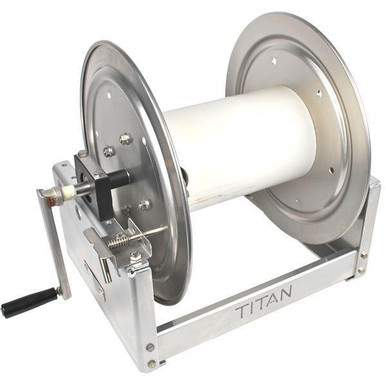
Titan's aluminum-reel model (for 200 ft 1/2″ or 300 ft 3/8″ hose, with stainless swivel and soft-wash capable) can be an excellent choice if you value mobility, ease of use, and lighter weight.
Reel Aluminum 12in Titan SH Capable Stack
$560.45
Reel Aluminum SH Capable Titan 12in Stackable Titan 4312S Hose Reel from the 4300 Series – the ultimate solution for managing and storing pressure washing… read more
Stainless Steel vs Aluminum: Which Lasts Longer?
In harsh environments, with frequent exposure to water, chemicals, salt, or heavy use, stainless steel generally outperforms aluminum for longevity and reliability.
For lighter-duty soft wash work, or when mobility and ease of handling are priorities, aluminum reels often deliver acceptable longevity — especially if maintained properly and not subjected to extreme stress.
In many real-world soft wash setups, choosing based on use case (heavy commercial vs residential/light duty) offers the best results.
When to Pick Stainless Steel vs Aluminum (Based on Use Case)
| Use Case / Priority | Best Choice | Why |
|---|---|---|
| Heavy-duty, frequent use (commercial soft washing) or chemical exposure | Stainless Steel | Offers maximum durability, chemical & corrosion resistance, high pressure tolerance |
| Long hose runs, heavy hoses, high pressure | Stainless Steel | Handles load and stress better, less risk of deformation or failure |
| Mobility, frequent moving of reel, lighter duty (residential/commercial light wash) | Aluminum | Easier to lift, maneuver, mount; less strain on mounts/supports |
| Budget-conscious or don’t need heavy-duty performance | Aluminum | Lower weight, acceptable performance for many jobs, easier handling |
FAQs
Can an aluminum reel rust?
Aluminum doesn’t rust like iron or regular steel. Instead, it forms a protective oxide layer that helps resist corrosion and moisture exposure, which makes it a good choice for hose reels — especially when properly treated/coated.
Will a stainless-steel reel handle higher pressure than aluminum?
Generally yes. Stainless reels tend to handle higher stress, loads, and abuse better than aluminum, making them more suitable for heavy-duty and high-pressure hoses.
Are aluminum reels lighter to mount and move than stainless-steel ones?
Yes. Aluminum reels are significantly lighter, which reduces strain on mounts/supports and makes them easier to move or reposition, a practical advantage when working on residential or mobile soft wash jobs.