
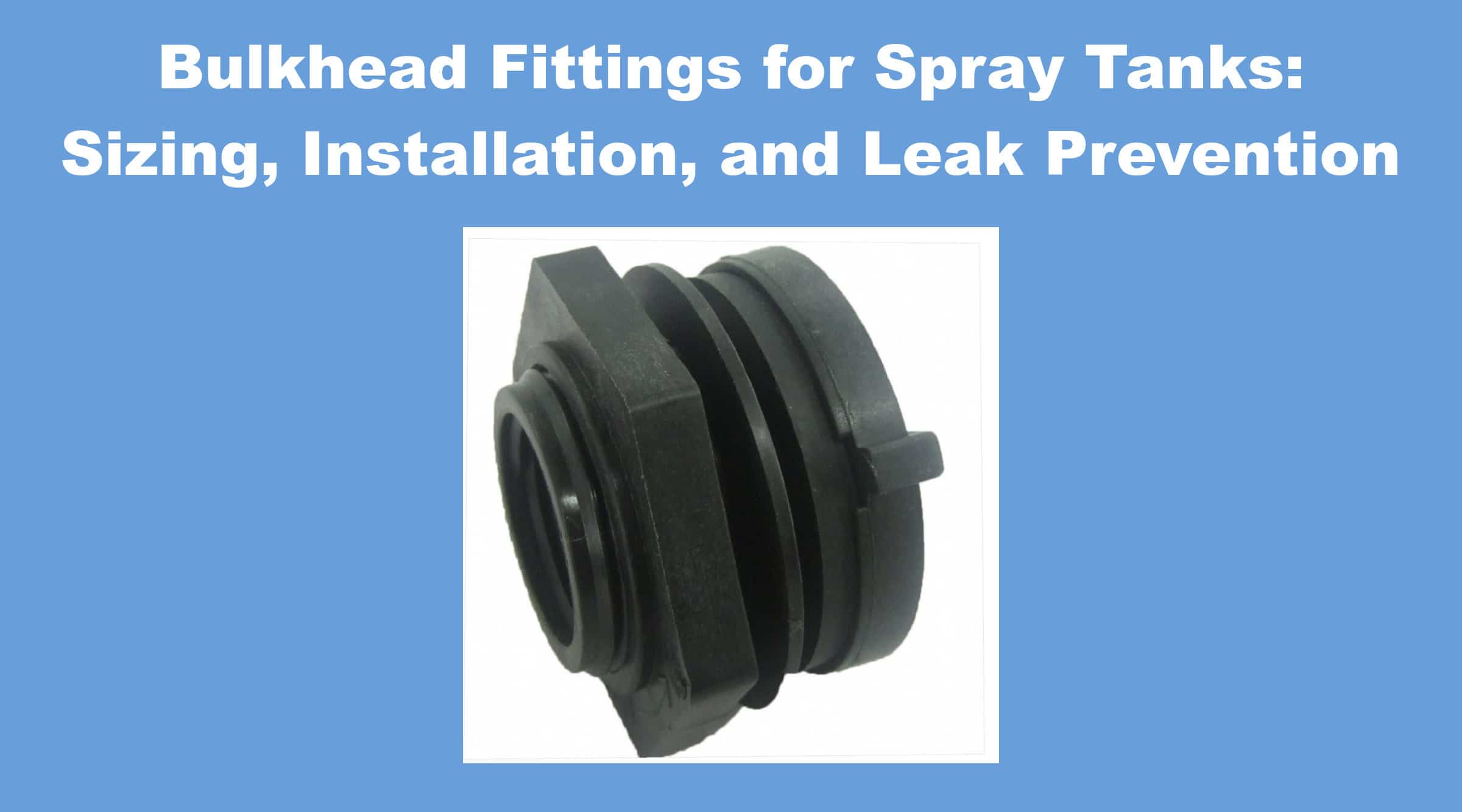
Bulkhead Fittings for Spray Tanks: Sizing, Installation, and Leak Prevention

Table of Contents
Bulkhead fittings on spray tanks are one of those details that either works perfectly or ruins your morning. A bulkhead fitting carries a fluid line through a tank wall — gasket and locknut compressed against the wall to seal it. The catch most people learn the hard way: the pipe size is not the hole size. A 2-inch fitting can have a 3-inch threaded body. Cut a 2-inch hole for it and you're drilling again.
This matters for every soft wash skid, pure water cart, and batch sprayer build. Get the fitting wrong and you chase leaks on a rig that should already be on a job site. Here's how to size, select, and install bulkhead fittings correctly — and how to fix the ones that aren't sealing.
Why the Hole Size Doesn't Match the Pipe Size
A bulkhead fitting's nominal diameter — 1/2", 3/4", 1", 2" — describes the pipe connection, not the body that passes through the tank wall. The threaded body is always larger. A 2-inch fitting commonly needs a 3-inch hole saw. Drill to the pipe size and the fitting won't pass through. Drill oversized and the flange can't seat against the wall to compress the gasket.
Before cutting anything, measure the fitting body at its widest point and check the manufacturer's required cutout dimension. This is the number that matters for your hole saw selection — not the NPT or barb size printed on the listing.
Fitting Types: Threaded, Slip, and Flanged
The connection style determines how your plumbing attaches and how easy the fitting is to service later.
Threaded ends join mating threads — male to female. Confirm the thread standard (NPT vs. GHT vs. BSP), gender, and nominal size. A 1/4" FNPT fitting and a 1/4" garden hose thread are not the same connection, even though they share a nominal diameter.
Slip connections accept pipe into a smooth socket — no threads involved. PVC pipe glued into a slip socket is common on batch sprayer and pure water tank builds. The joint is permanent unless you cut the pipe, so plan your plumbing route before committing.
Flanged connections use a broad face pressed against the tank wall with fasteners. On most tank bulkheads, the flange is the tank-side seal surface, while the opposite end may be threaded or slip. One fitting can combine a flanged tank face with a threaded plumbing end — read the product listing for each end separately.
Access drives the choice as much as anything. Threaded joints unscrew for service. Slip joints require cutting. Flanged joints need wrench clearance on both sides of the wall. If the fitting sits against a frame rail inside a soft wash skid, flanged service access may not exist once the build is assembled.
Materials: Match the Weakest Link
PVC and polypropylene dominate soft wash and pure water tank builds. Brass shows up on smaller fittings and fuel or chemical applications. The body material, gasket material, and connected plumbing all have independent chemical and temperature limits. Your system's actual limit is the lowest-rated component in the wetted path.
A PVC bulkhead with an EPDM gasket running dilute sodium hypochlorite is standard soft wash territory. Swap that EPDM gasket for one rated only for water and the seal degrades in weeks. Brass fittings on an SH tank corrode. Check every wetted surface against the actual fluid — not just the fitting body.
The Banjo 1/2" FNPT Bulkhead Fitting uses polypropylene construction suited to soft wash chemical exposure. For larger tank outlets, the 1" Bulkhead Fitting with Gasket handles higher flow demands on batch sprayer and pure water builds. And the ProTool 1" Bulkhead Fitting is a common choice for tank-based skid plumbing where chemical resistance and flow volume both matter.
Installation: Five Steps, One Chance to Get It Right
- Mark and verify. Mark the center point on the tank wall. Confirm clearance on both sides — inside the tank and against whatever the tank sits on. On fiberglass tanks, wear eye and respiratory protection.
- Drill to the body dimension. Use a hole saw sized to the fitting body, not the pipe connection. Keep it perpendicular. Ease pressure as the saw exits to avoid tearing the tank wall.
- Clean the edge. Remove burrs, dust, and debris from the cut. Any material trapped under the gasket is a future leak.
- Seat the gasket and flange. Place both against the inside tank wall. Pass the fitting body through the opening from inside.
- Hand-tighten the locknut, then add a half turn. Overtightening pushes the gasket out of position. A bulging gasket means you've gone too far. Back off and re-seat.
Connect plumbing only after the fitting sits square against the wall. A fitting that's cocked in the hole will never seal reliably, no matter how tight the nut gets.
Troubleshooting Leaks
Most bulkhead leaks trace to one of four causes. Identify which one before reaching for a wrench.
- Leak at the tank wall: Gasket not seated flat, nut too loose, or flange cracked. Remove the nut, inspect the gasket and flange, and reassemble.
- Leak at threaded plumbing: The pipe threads on the outlet side aren't sealed. On PVC female threads, confirm proper thread sealant or tape application.
- Leak at a socket joint: A pipe-to-socket bond failed. This is a plumbing problem, not a bulkhead problem — the fix is at the glue joint.
- Recurring leak after tightening: The fitting or tank wall has moved. Skid vibration, tank settling, or a cracked nut/flange can prevent a stable seal. Replacing hardware is cheaper than chasing the same leak every week.
Don't overtighten to compensate for a damaged gasket or cracked component. That makes the problem worse. Replace the failed part.
Selecting the Right Fitting for Skid and Tank Builds
For ProTool Soft Wash Skids and batch sprayer builds, the selection sequence is straightforward:
- Identify the pipe or hose connection already in the system — size, thread standard, and gender.
- Match those specs to the fitting's plumbing-side connection.
- Confirm body and gasket materials are rated for your fluid (SH, water, surfactant blend).
- Check the required cutout dimension and confirm it fits your tank wall thickness.
- Verify the fitting body clears surrounding frame, pump mounts, or reel brackets.
Multi-connection fittings need extra attention. A fitting with a 1/2" NPT on one end and a 3/4" barb on the other describes two separate interfaces — not interchangeable sizes. Keep each end's specs paired when selecting connected plumbing and polypropylene fittings.
Browse tanks and bulkhead fittings and valves to match your build specifications.
Document Every Connection
Before the rig leaves the shop, record the fitting specs alongside the tank layout and plumbing configuration. Keep product documentation with maintenance records. When a crew member inspects a joint six months later, a clear reference beats guessing whether that's a 3/4" NPT or a 3/4" GHT — because those are not the same fitting, and the wrong replacement leaks on the first job.
Products Mentioned
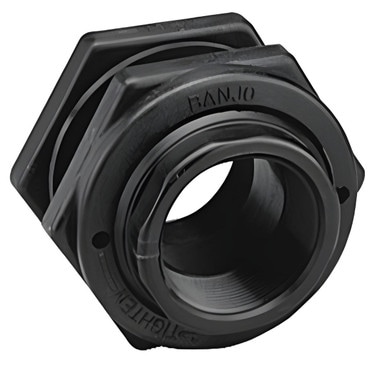 Bulkhead Fitting 1/2in FNPT Banjo SKU: 74-8138 | 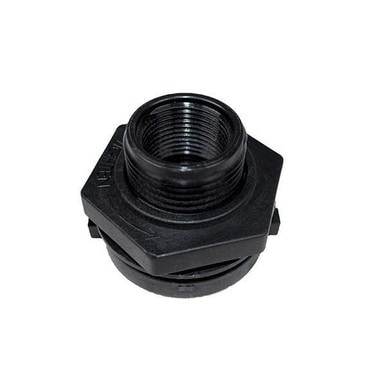 Bulkhead 1in. Fitting W/Gasket SKU: 74-8141 | 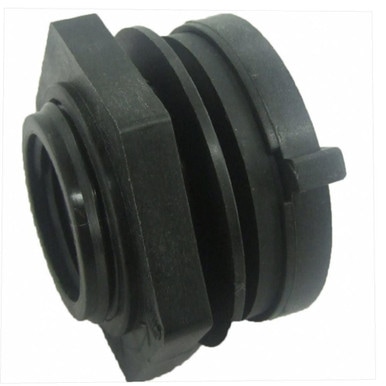 Bulkhead Fitting 1in SKU: 150-04399 |
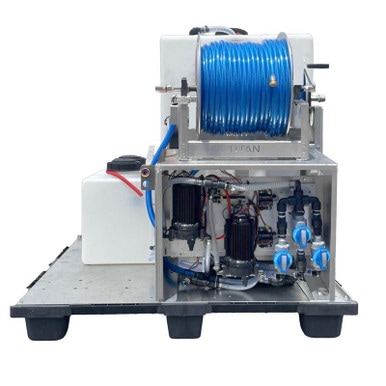 ProTool Soft Wash Skid 12V SKU: 150-047M | 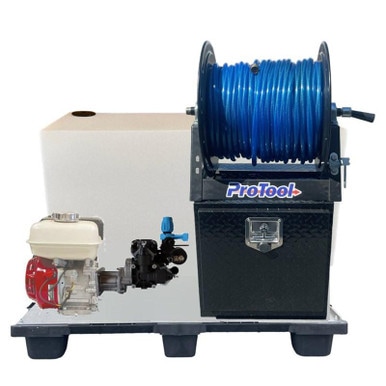 Batch Sprayer 6 gpm Gas Diaphram pump, 100 gallon tank, Reel with 200ft 1/2in spraying hose SKU: 150-0473 |