How to Dilute Sodium Hypochlorite for Soft Washing

Table of Contents
Knowing how to dilute sodium hypochlorite for soft washing is the line between a clean building and a liability claim. Most contractors understand that 12.5% industrial SH needs to come down before it hits a surface — but the gap between "mix ratio" and "percentage on the surface" is where damage, wasted chemical, and inconsistent results live.
This guide gives you the repeatable math, surface-specific ratio charts, and equipment recommendations to get your dilution right every time.
SH Concentrations: What Actually Matters
The number on the drum is not the number on the wall. Percentage on the Surface (POTS) is what determines whether you clean effectively or cause damage. Start with 12.5% concentrate and cut it with an equal volume of water — your POTS is 6.25%. That distinction drives every mix decision you make.
SH degrades from the moment it's manufactured. Heat and UV accelerate the process. A drum stored in direct sun for a week may test closer to 10% than the labeled 12.5%. Use opaque, UV-stabilized tanks and rotate stock. If your math assumes 12.5% and the drum is actually 10%, you're under-cleaning — and you won't know until the callback.
Why 12.5% Is the Pro Standard
Consumer bleach at 6% has no place on a soft wash rig. Industrial 12.5% SH lets you carry higher concentration in less volume, treat more square footage per tank, and reduce refills on large commercial jobs. The cost per active gallon is dramatically lower.
The Role of Surfactants
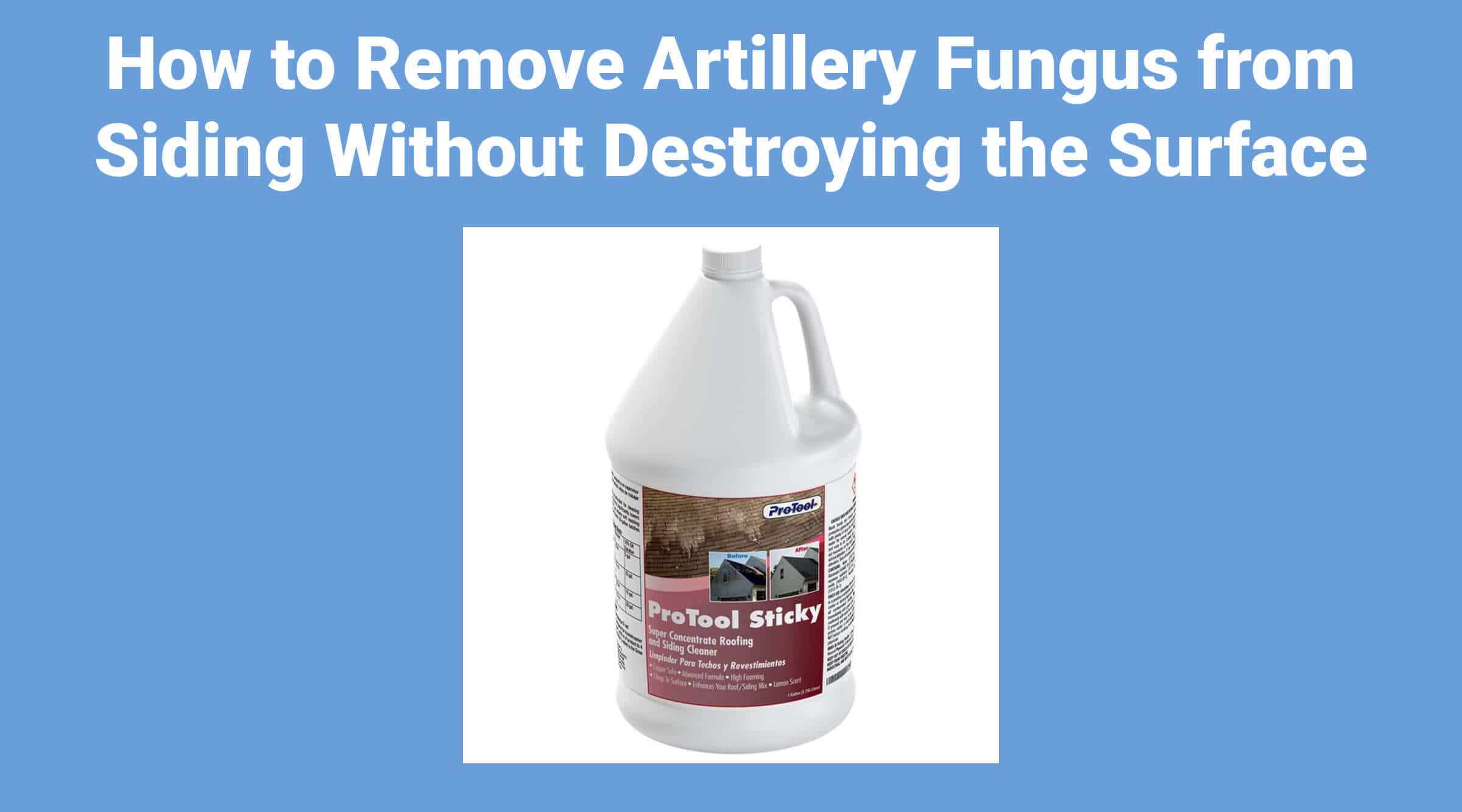
SH and water alone slide off vertical surfaces before the chemistry can work. Bleach-stable surfactants — products like ProTool Sticky — reduce surface tension so your mix clings to siding and shingles. Better dwell means you can run a lower POTS and still get a full kill on organics, which saves chemical and protects the substrate.
Never substitute dish soap. Most contain compounds that neutralize SH on contact or, worse, release chlorine gas when mixed with hypochlorite.
Safety Protocols for Handling SH Concentrates
Industrial 12.5% SH is not the bottle under your kitchen sink. It is highly corrosive and reactive.
Always add SH to water, never the reverse. Water absorbs the exothermic heat of dilution. Reversing the order risks splashing concentrated chemical.
Never mix SH with acids or ammonia. The reaction produces chlorine or chloramine gas — lethal in confined spaces, permanently damaging to lungs at lower exposures. Flush all tanks, hoses, and sprayers completely before switching chemicals. Label every container.
PPE Requirements
- Gloves: Heavy-duty nitrile or PVC — standard latex is insufficient against concentrated SH.
- Eyes: Wrap-around safety goggles or a full-face shield.
- Respiratory: NIOSH-approved respirator with acid gas cartridges, especially when mixing in heat or confined areas.
Plant and Property Protection
SH is a non-selective herbicide. The "Pre-wet, Apply, Rinse" protocol is non-negotiable:
- Saturate all surrounding vegetation with fresh water before application. Full plant cells won't absorb SH solution.
- Apply your mix.
- Rinse foliage again after cleaning to remove residue.
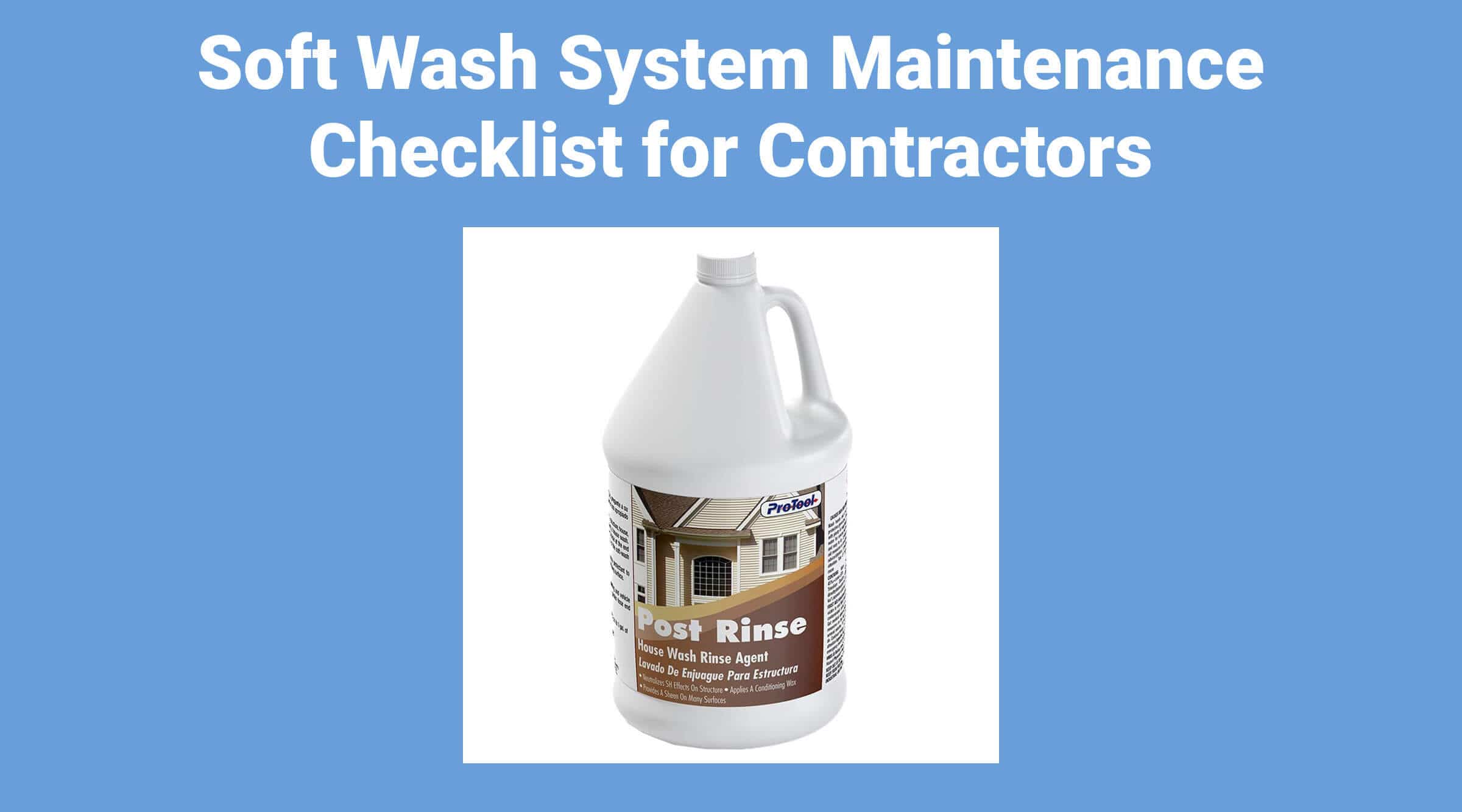
For heavy applications, follow up with ProTool Post Rinse or gypsum to neutralize soil pH and prevent root damage. Cover sensitive outdoor electronics with plastic sheeting to prevent corrosion.
The Dilution Math
Stop guessing. The industry standard formula to dilute sodium hypochlorite for soft washing is:
(SH Concentration ÷ Desired POTS) − 1 = Parts Water per 1 Part SH
Example — 3% roof mix from 12.5% SH:
(12.5 ÷ 3) − 1 = 3.16 parts water per 1 part SH
For a 50-gallon batch: divide 50 by the total parts (1 + 3.16 = 4.16). That's roughly 12 gallons SH + 38 gallons water = 3% POTS. This keeps you inside the safe window for asphalt shingles while still killing organics.
Accounting for Downstream Injectors
Downstream injectors draw chemical after the pump at fixed ratios — commonly 10:1 or 20:1. But "10:1" is nominal. Your actual draw rate varies with hose length, nozzle size, and water pressure.
Run a bucket test: Place your suction line in a measured gallon of water, pull the trigger for one minute, and measure what's left. That tells you your real draw rate. At a true 10:1 draw with straight 12.5% SH, your POTS is only ~1.13%. If you need more strength for heavy oxidation, you need to either pre-mix a hotter bucket concentrate or move to a dedicated soft wash system.
Batch Mixing vs. Proportioner Systems
Batch mixing works for startups but has a shelf-life problem — a morning batch may lose measurable potency by afternoon in summer heat. Proportioner systems and metering manifolds draw from separate SH, water, and surfactant tanks in real time. You change your POTS on the fly — hot for a roof, light for siding — without remixing. The ProTool Soft Wash Metering Plates let you dial in exact percentages from your rig's control point.
Dilution Ratios by Surface
The math is constant. What changes is the substrate's tolerance for oxidation.
| Surface | POTS Range | Notes |
|---|---|---|
| Roofs (asphalt shingles) | 3.0%–4.0% | Heavy moss/lichen may need 4%. Exceeding 4% degrades petroleum-based shingle adhesives. |
| Concrete & masonry | 2.0%–3.0% | Deep-set carbon and algae. Rinse thoroughly — salt crystallization stains concrete fast. |
| Vinyl & Dryvit siding | 0.5%–1.5% | Too strong leaves "tiger stripes." Standard house wash lives here. |
| Wood (decks & fences) | 0.5%–1.0% | SH dissolves lignin. Over 1.0% fuzzes the grain — requires sanding to fix. Follow with a wood brightener to restore pH. |
Dwell time is your second lever. A 1% mix dwelling 10 minutes often matches a 2% mix at 5 minutes. Never let the solution dry on the surface — dried SH leaves salt crystals that can permanently stain. In high heat, lower your concentration and increase rinse frequency.
Equipment for Precision Application
Your dilution math is only as good as the hardware delivering it. SH eats standard seals and pump internals. Professional soft wash pumps use Viton or Santoprene diaphragms engineered for prolonged chemical exposure.
The Comet BPX25 and Comet P40 are the workhorses of the soft wash industry — chemical-resistant diaphragm pumps that maintain consistent draw rates job after job. Consumer-grade units with EPDM seals fail fast on SH duty.
End-of-day flush is mandatory. Run fresh water through every pump, valve, and hose line. SH left in the system crystallizes and degrades seals overnight. A dedicated flush valve on your rig makes this a two-minute task instead of a teardown.
Proportioners and Metering Manifolds
The ProTool Soft Wash Metering Block draws from dedicated SH, water, and surfactant tanks through individual metering valves. You adjust POTS from the control point without touching a bucket. This eliminates batch-mixing math errors, reduces chemical waste, and lets you switch substrates instantly. The translucent 5-port manifold gives you visual confirmation of flow.
Downstream Injectors and X-Jets
Downstream injectors protect your high-pressure pump from chemical contact by introducing SH after the pump via the Venturi effect. For applications needing higher POTS — roof work especially — the X-Jet M5 is the better tool. It bypasses the pressure hose entirely, drawing chemical directly at the gun for draw rates as aggressive as 2:1 or 3:1.
All fittings in contact with SH should be stainless steel, PVC, or poly. Brass corrodes fast. Maintaining tight tolerances on your fittings keeps draw rates consistent over time — which is the whole point of doing the math in the first place.
Putting It Together
Mastering how to dilute sodium hypochlorite for soft washing comes down to three things: accurate POTS math, surface-appropriate ratios, and equipment that delivers what your calculations promise. Transition from batch mixing to a proportioner system when your volume justifies it — the consistency gain pays for itself in reduced callbacks and chemical savings.
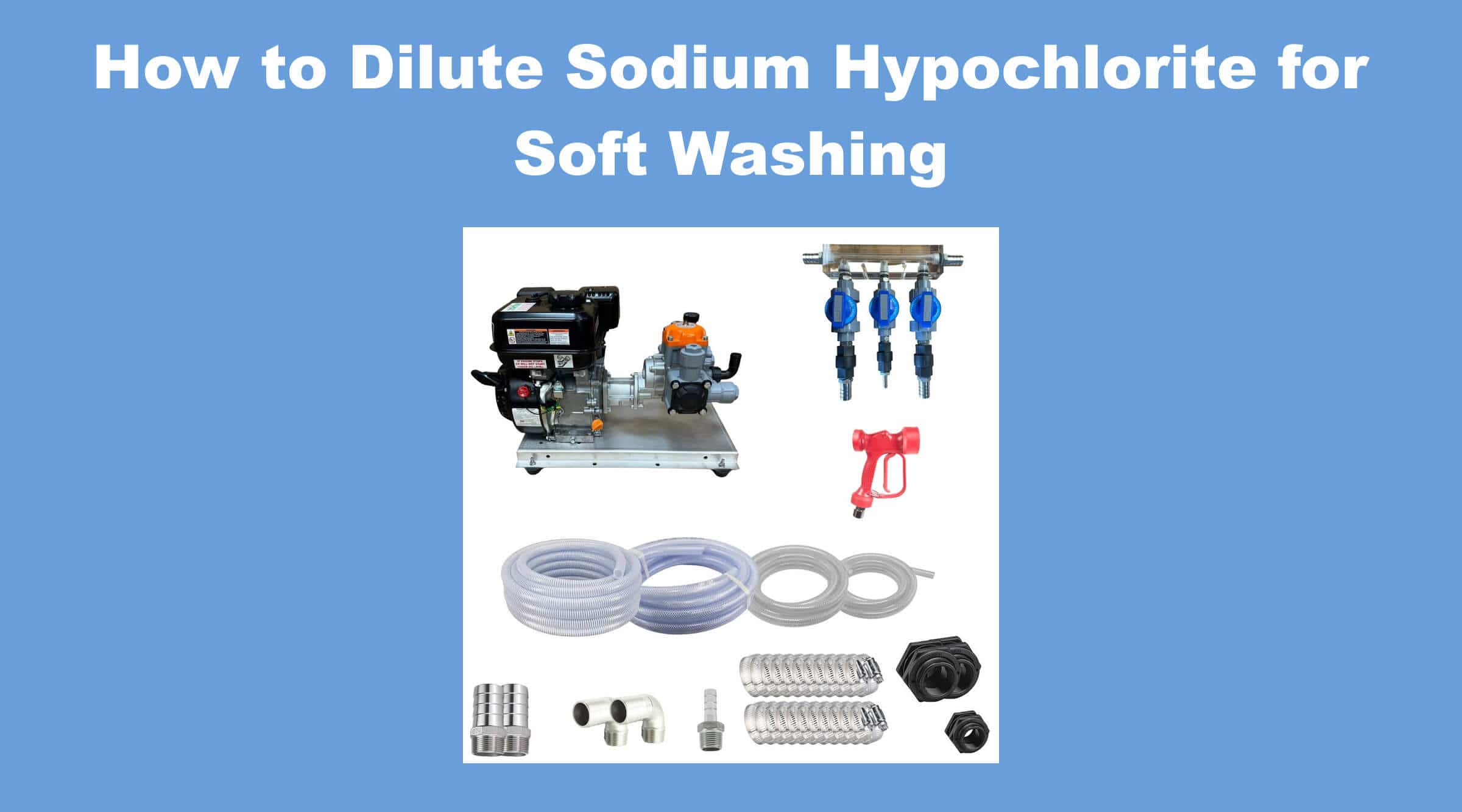
J.Racenstein stocks a full line of SH-compatible soft wash equipment, from complete 12V skids to individual metering blocks, diaphragm pumps, and surfactants. If you're building or upgrading a rig, the Gas Soft Wash Starter Kit is a turnkey entry point with chemical-resistant components matched to the demands of SH.
Products Mentioned
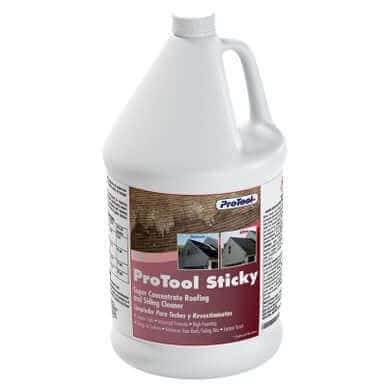 ProTool Sticky SKU: 83-07M | 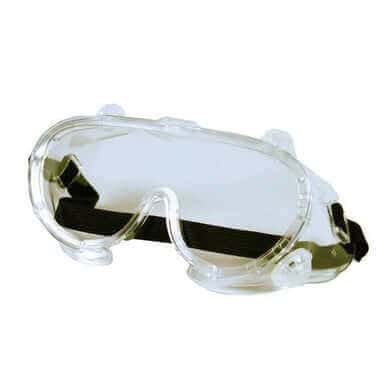 Safety Glasses Clear SKU: 74-7420 | 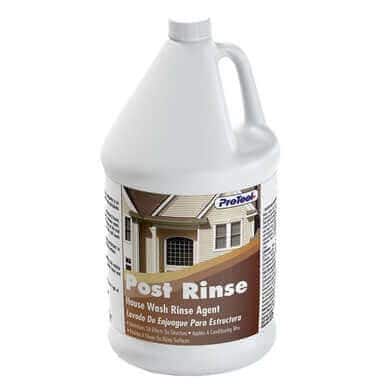 ProTool Post Rinse SKU: 83-03M |
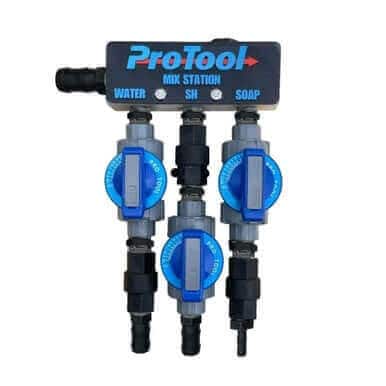 Soft Wash Metering Block SKU: 150-0454M | 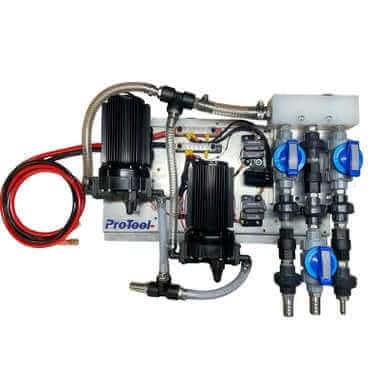 ProTool Soft Wash Metering Plates SKU: 150-045M | 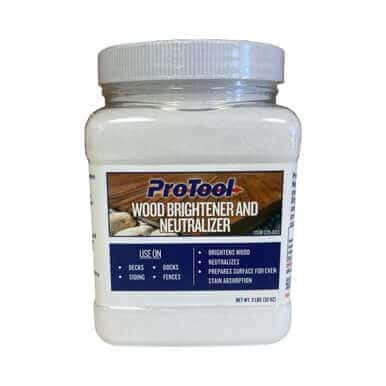 Protool Wood Brightener and Neutralizer SKU: 320-003 |
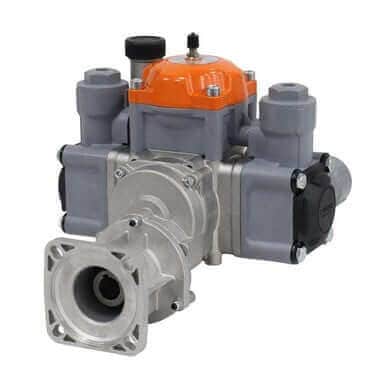 Comet BPX25 GR pump SKU: 150-0432 | 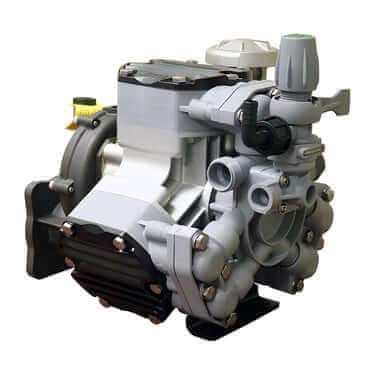 Comet P40 Diaphragm Pump w/ Regulator SKU: 150-0428 | Soft Wash Metering Block SKU: 150-0454M |
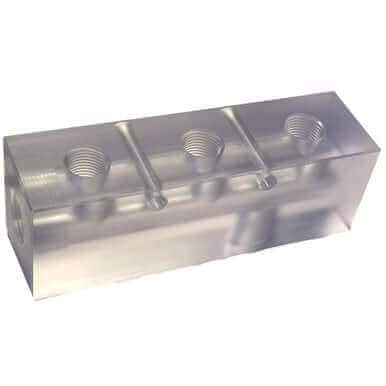 Metering Manifold Translucent 5 Port Softwash (3ea) 1/2in and (2ea) 3/4in SKU: 150-361 | 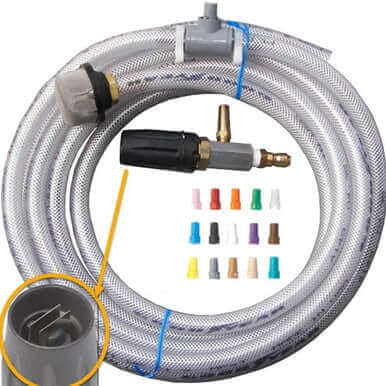 X-Jet M5 Variable Spray SKU: 74-53M | Soft Wash Metering Block SKU: 150-0454M |
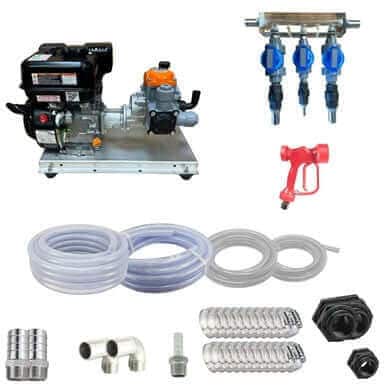 Gas Soft Wash Starter Kit SKU: 150-04582 |