Surface Cleaner Leaving Stripes? Diagnose and Fix It

Table of Contents
When your surface cleaner leaves stripes on a driveway, it's not a cosmetic nuisance — it's a calibration failure. Your nozzle orifice size, PSI, and GPM are out of balance, and the result is either a costly re-wash or, worse, permanent etching. Either one kills your margin on the job.
This guide breaks down the mechanical, operational, and chemical causes behind a surface cleaner leaving stripes — and what to do about each one.
Dirt Residue vs. Concrete Etching: Know What You're Looking At
The first diagnostic question: are those stripes removable, or did you damage the slab?
Tiger stripes — alternating clean and dirty lines — mean your spray bar didn't deliver consistent dwell time or pressure across its diameter. They look bad, but they're fixable with a second pass or chemical treatment.
Etching is structural. You've ground through the cream coat and exposed aggregate. That's permanent.
The quick field test: pour water over the affected area. If the stripes vanish when wet and reappear when dry, it's residual dirt. If the stripes remain visible as texture differences under standing water, you've etched.
Why Surface Cleaners Are More Prone to Striping Than Wands
A wand gives you live visual feedback on your fan pattern. A surface cleaner hides everything under a housing and relies on the mechanical relationship between spray bar RPM and your walking speed. When that relationship breaks down — low RPM, fast walking, clogged nozzle — stripes are the immediate result.
Detecting Etching Before It's Too Late
Watch your runoff. Milky or cloudy water means you're washing away cement paste, not just dirt. After the surface dries, run your fingertips across the striped areas. If they feel rougher or more porous than surrounding concrete, the surface is compromised. This is most common on "green" concrete — anything under 28 days of cure, though slabs can remain soft for up to a year.
Mechanical Causes: Hardware Troubleshooting
Mechanical failures produce symmetrical, repeating stripe patterns — distinct from the irregular lines caused by inconsistent walking speed. Start troubleshooting with the components that directly manage water delivery and rotation.
Clogged Nozzles
A single grain of sand or a shred of Teflon tape in a nozzle orifice distorts the fan pattern and creates a dead zone where concrete receives zero impact. That dead zone becomes a dirty stripe. Always match replacement tips to your pump's GPM and PSI using a nozzle chart. Incorrectly sized nozzles either choke your pump or fail to deliver adequate pressure.
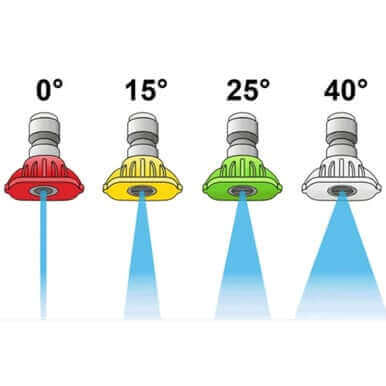
Standard professional surface cleaners ship with 25-degree tips — a balanced fan that covers area without being overly aggressive. For heavy soil or thick biological growth, 15-degree tips increase cutting force but raise etching risk. On a two-nozzle bar, two #2.0 tips equal a total #4.0 orifice. Over time, high-pressure water rounds out the orifice edges, and the fan loses its defined edge. That's when you start seeing blurry stripes even with clean nozzles.
Spray Bar Alignment
A bent spray bar — usually from hitting a raised clean-out or thick expansion joint — changes the angle of attack. If one nozzle sits closer to the ground than the other, you get a lopsided cleaning path. Inspect the bar for symmetry and confirm nozzles are angled at 5 to 10 degrees to provide the torque needed for rotation.
Swivel Maintenance
The swivel is the heart of the machine. A worn swivel creates resistance that prevents the bar from reaching necessary RPM. Test it: with the machine off, hand-spin the bar. It should rotate freely for several seconds without grinding or immediate stopping.
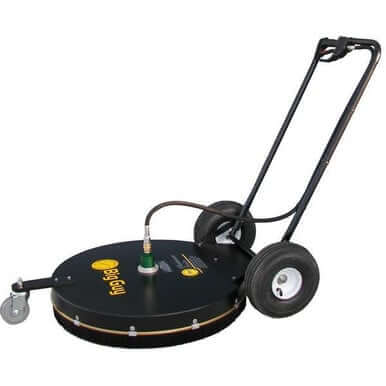
Professional units like the Whisper Wash Ground Force feature greasable swivels that need regular maintenance. Mosmatic recovery cleaners use high-speed sealed bearings that are non-greasable. When RPM drops, nozzles "pulse" across concrete instead of creating a continuous cleaning path — the hallmark of a failing swivel. Rebuild kits like the Hammerhead swivel repair kit can restore function, but if grinding persists after a rebuild, the swivel is beyond service life.
Operational Errors: Walking Speed and Pattern
Perfect hardware still stripes if the operator moves wrong. The physics are straightforward: if you move too fast for your flow rate, nozzles don't clear the pores of the substrate, and thin dirt lines appear as the surface dries.
The 50% Overlap Standard
Each pass should cover half the previous pass's path. This sounds like it doubles workload, but it actually saves time by eliminating the need for a full second wash. Also manage your hose. A snagged hose creates stuttering movement — micro-stops that produce inconsistent dwell time and visible lines. Keep the hose clear of the cleaner's path.
Walking Speed by GPM
Your maximum walking speed is dictated by GPM. A 4 GPM machine generally requires about 1 foot every 2 to 3 seconds. An 8 GPM machine delivers twice the water volume and allows significantly faster pace. If you see "ghosting" — faint, rhythmic lines — you're outrunning your machine's cleaning capacity. Slow down immediately.
Avoid swinging the cleaner in a vacuum-like arc. Maintain a steady, straight-line push to keep RPM consistent across the entire cleaning path.
The Perpendicular Pattern
Clean perpendicular to the primary viewing angle — the road or front door. This hides minor imperfections from the client's line of sight. Start at the lowest point and work upward so dirty runoff doesn't settle on cleaned sections. For high-end residential work, a cross-hatch pattern — cleaning the entire surface twice in two directions — is the ultimate fail-safe against striping. Address edges and corners with a wand first to create a clean perimeter before beginning field passes.
Chemical Solutions: SH Pre-Treat and Post-Treat
Many stripes are microscopic layers of algae, mold, or lichen that the spray bar missed due to high forward speed or low RPM. Chemical intervention targets the biological root of the problem.
Pre-Treatment
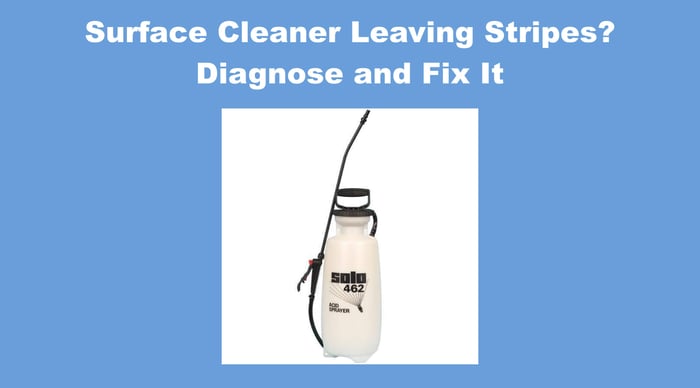
Pre-treating with sodium hypochlorite softens the bond between organic growth and the substrate, letting your surface cleaner work more efficiently — often at a faster walking pace without sacrificing finish quality. Adding a surfactant like ProTool Sticky reduces surface tension so the SH mix penetrates into pores rather than sheeting off. For application, a 12V soft wash system or a dedicated pump-up sprayer gives you the control you need.
Post-Treatment: The "Let It Dry" Rule
The most common post-treat mistake is rinsing too early. Don't rinse a post-treatment. The SH needs to stay on the surface to continue breaking down organic material. UV from the sun accelerates the bleaching process and blends remaining swirl marks into a uniform finish.
A 1% SH solution handles standard brightening and light blending. Heavy tiger stripes on neglected driveways may need 3%. Downstreaming typically limits you to 1% to 1.5%; for higher concentrations, use a dedicated sprayer.
Advise the client that concrete will continue to brighten as it dries — full results aren't visible for at least two hours. Pre-wet surrounding turf and shrubs to prevent chemical burn, and manage all runoff per local environmental standards.
When to Upgrade Your Equipment
If consistent troubleshooting and chemical treatments still produce stripes, your equipment has hit its performance ceiling. Upgrading is a margin decision, not a luxury — you're buying back re-wash hours and labor cost.
Choosing the Right Swivel
The swivel is the single most critical component for preventing stripes. Standard swivels may work for light residential jobs, but commercial volume demands industrial-grade internals. The ProTool 18" surface cleaner and ProTool 20" stainless steel cleaner are built for high-RPM durability on production work. A superior swivel reduces internal friction, spins the bar faster, and eliminates the gaps that cause striping.
The GPM Advantage: Match Cleaner to Machine
Flow rate is the primary factor in cleaning efficiency. While 4 GPM is the entry-level standard, 8 GPM is the production sweet spot. Follow the "4 inches per GPM" rule: a 4 GPM machine pairs with a 16-inch cleaner, an 8 GPM machine supports up to 32 inches. Exceeding this ratio drops effective nozzle pressure and causes stripes.
For contractors ready to step up, the ProTool 24" stainless steel cleaner is sized for high-GPM rigs and commercial flatwork. Pair it with a properly matched 4.0 GPM or 8.0 GPM pressure washer for the best results.
Pre-Job Checklist
- Verify nozzle orifice size matches your pump's GPM and PSI
- Hand-spin the swivel — it should rotate freely without grinding
- Clear debris from nozzle tips with a cleaning tool
- Inspect spray bar for symmetry and correct nozzle angle (5–10°)
- Plan your walking path for consistent 50% overlap
Keep a Save-the-Day Kit on Your Truck
Stock spare nozzle tips, high-pressure O-rings, and a backup swivel. When a nozzle wears out or an O-ring blows mid-job, having the part on hand keeps a minor mechanical issue from turning into a lost day of production.
Products Mentioned
 Nozzle Tip Quick Connect Pressure Washer 1/4in Plug SKU: 74-50M | 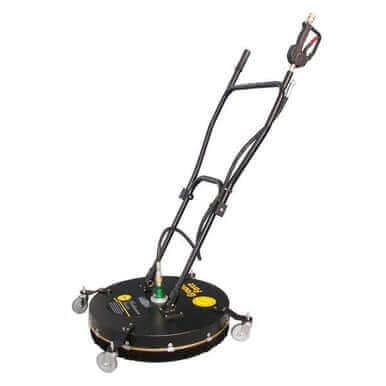 Whisper Wash 24in Ground Force w/wheels SKU: 74-3810 | 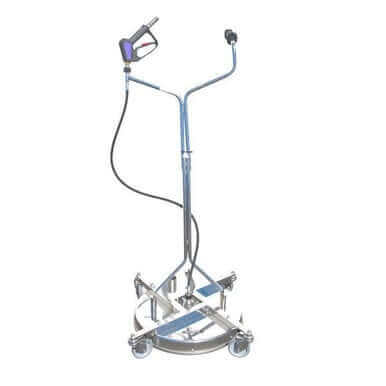 Recovery Surface Cleaner 21in Mosmatic SKU: 74-2510 |
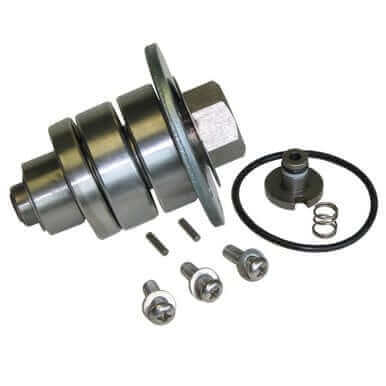 Hammerhead Swivel Rotary Head Repair Kit SKU: 74-38052 | 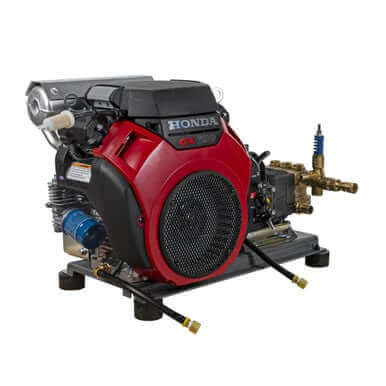 8.5 GPM 4200 PSI Cold Water Gas Pressure Washer SKU: 74-1181 | 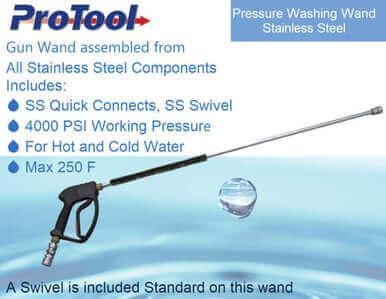 ProTool Gun with 36in SS Lance, SS Quick Connects and SS Swivel SKU: 74-5116 |
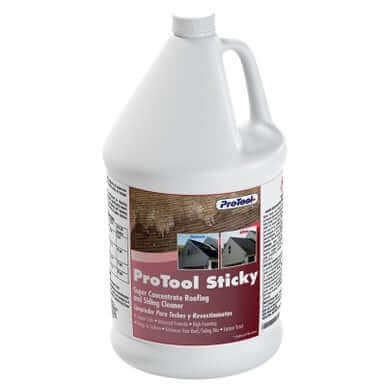 ProTool Sticky SKU: 83-07M | 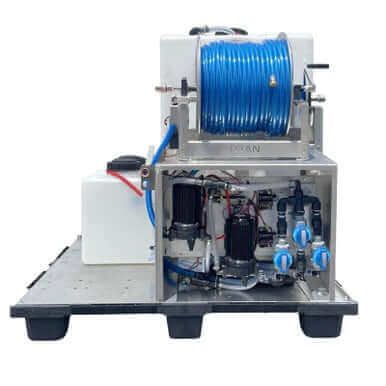 ProTool Soft Wash Skid 12V SKU: 150-047M | 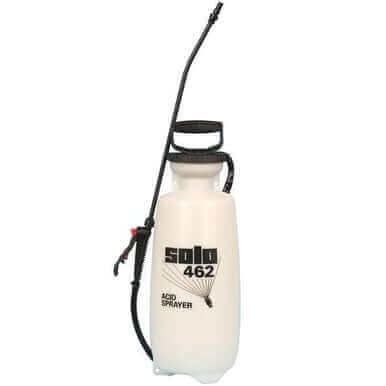 Pump Sprayer 2 Gal Acid Resistant Solo SKU: 515-045 |
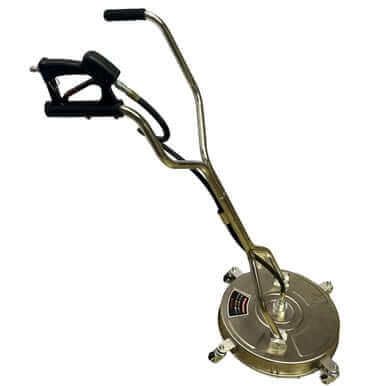 Surface Cleaner 18in Protool 4000psi SKU: 74-3795 | 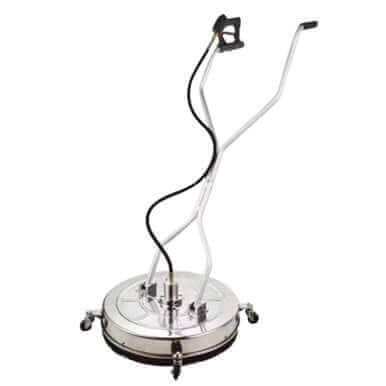 ProTool 20" Stainless Steel Surface Cleaner SKU: 74-3785 | 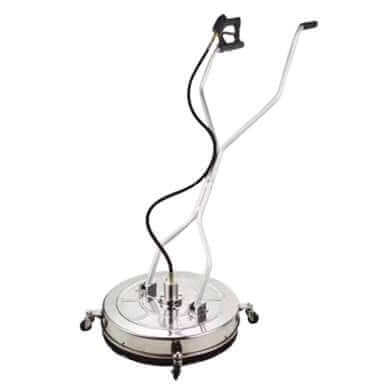 ProTool 24" Stainless Steel Surface Cleaner SKU: 74-3790 |
Nozzle Tip Quick Connect Pressure Washer 1/4in Plug SKU: 74-50M |